Avian Influenza Nonstructural Protein 1 Antibody
Catalog# : 3915
Influenza A virus is a major public health threat, killing more than 30,000 people per year in the USA. Novel influenza virus strains caused by genetic drift and viral recombination emerge periodically to which humans have little or no immunity, resulting in devastating pandemics. Influenza A can exist in a variety of animals; however, it is in birds that all subtypes, including the so-called “avian flu” or H5N1, can be found. These subtypes are classified based on the combination of the virus coat glycoproteins hemagglutinin (HA) and neuraminidase (NA) subtypes. One of the less studied proteins encoded by, but not incorporated in, the influenza virus is the nonstructural protein (NS) 1. NS1 counters cellular antiviral activities and acts as a virulence factor. It can bind to double-stranded RNA and sequester it from 2’-5’ OAS, preventing the activation of the RNAse L, which normally acts to degrade RNA and prevent virus replication. NS1 also binds to and inhibits the anti-viral protein kinase PKR.
Additional Names : Avian Influenza Nonstructural Protein 1, H5N1 NS1, Nonstructural protein 1
Source : Avian Influenza Nonstructural Protein 1 antibody was raised against a synthetic peptide corresponding to 14 amino acids at the carboxy terminus of the Avian Influenza Nonstructural Protein 1 protein. Efforts were made to use relatively conserved regions of the viral sequence as the antigen.
Purification : Affinity chromatography purified via peptide column
Clonality and Clone : This is a polyclonal antibody.
Host : Avian Influenza Nonstructural Protein 1 antibody was raised in rabbit. Please use anti-rabbit secondary antibodies.
Application : Avian Influenza Nonstructural Protein 1 antibody can be used for the detection of the avian influenza nonstructural protein 1 protein from influenza A in ELISA.
Tested Application(s) : E
Buffer : Antibody is supplied in PBS containing 0.02% sodium azide.
Blocking Peptide : Cat.No. 3915P - Avian Influenza Nonstructural Protein 1 Peptide
Long-Term Storage : Avian Influenza Nonstructural Protein 1 antibody can be stored at 4ºC, stable for one year. As with all antibodies care should be taken to avoid repeated freeze thaw cycles. Antibodies should not be exposed to prolonged high temperatures.
Species Reactivity :V
GI Number : 85680915
Accession Number : ABC72653
Short Description : H5N1, virulence factor, dsRNA, RNase L
References
1. Thompson WW, Shay DK, Weintraub, et al. Mortality associated with influenza and respiratory syncytial virus in the United States. JAMA 2003; 289:179-186.
2. Alexander DJ. A review of avian influenza. Proceedings of the European Society for Veterinary Virology (ESVV) Symposium on Influenza Viruses of Wild and Domestic Animals. Vet. Microbiol. 2000; 74:3-13.
3. Krug RM, Yuan W, Noah D, et al. Intracellular warfare between human influenza viruses and human cells: the role of the viral NS1 protein. Virology 2003; 309:181-9.
4. Min J-Y and Krug RM. The primary function of RNA binding by the influenza A virus NS1 protein is infected cells: inhibiting the 2’-5’ oligo (A) synthase/RNase L pathway. Proc. Natl. Acad. Sci. USA 2006; 103:7100-5.

Showing posts with label Antibiotic Peptides.. Show all posts
Showing posts with label Antibiotic Peptides.. Show all posts
Sunday, September 12, 2010


Avian Influenza Neuraminidase Antibody
Avian Influenza Neuraminidase Antibody
Catalog# : 3423
Influenza A virus is a major public health threat, killing more than 30,000 people per year in the USA (1). Novel influenza virus strains emerge periodically to which humans have little or no immunity, resulting in devastating pandemics. Influenza A can exist in a variety of animals; however it is in birds that all subtypes can be found (2). These subtypes are classified based on the combination of the virus coat glycoproteins hemagglutinin (HA) and neuraminidase (NA) subtypes. During 1997, an H5N1 avian influenza virus was determined to be the cause of death in 6 of 18 infected patients in Hong Kong (3). There was some evidence of human to human spread of this virus, but it is thought that the transmission efficiency was fairly low (4). Although it has been known that cleavage site and glycosylation patterns of the HA protein play important roles in determining the pathogenicity of H5 avian influenza viruses, it has only recently been shown that an additional glycosylation site within the globular head of the NA protein also contributes to the high virulence of the H5N1 virus (5).
Additional Names : Avian Influenza Neuraminidase (CT), Neuraminidase
Source : Avian influenza neuraminidase antibody was raised against a synthetic peptide corresponding to 15 amino acids at the carboxy terminus of the avian influenza neuraminidase protein. Efforts were made to use relatively conserved regions as the antigen.
Purification : Affinity chromatography purified via peptide column
Clonality and Clone : This is a polyclonal antibody.
Host : Avian Influenza Neuraminidase antibody was raised in rabbit. Please use anti-rabbit secondary antibodies.
Immunogen : Avian Influenza Neuriminidase (C-Terminus) Peptide (Cat. No. 3423P)
Application : Avian influenza neuriminidase antibody can be used for the detection of the avian influenza neuriminidase protein from the H5N1 strain of Avian influenza A in ELISA. It will detect 10 ng of free peptide at 1 µg/ml.Other applications are pending.
Tested Application(s) : E
Buffer : Antibody is supplied in PBS containing 0.02% sodium azide.
Blocking Peptide : Cat. No. 3423P - Neuriminidase Peptide
Long-Term Storage : Avian Influenza Neuraminidase antibody can be stored at 4ºC, stable for one year. As with all antibodies care should be taken to avoid repeated freeze thaw cycles. Antibodies should not be exposed to prolonged high temperatures.
Species Reactivity :V
GI Number : 39840718
Accession Number : CAC95053
Short Description : (CT) Avian Flu H5N1 Neuraminidase
References
1. Thompson WW, Shay DK, Weintraub, et al. Mortality associated with influenza and respiratory syncytial virus in the United States. JAMA 2003; 289:179-186.
2. Alexander DJ. A review of avian influenza. Proceedings of the European Society for Veterinary Virology (ESVV) Symposium on Influenza Viruses of Wild and Domestic Animals. Vet. Microbiol. 2000; 74:3-13.
3. Shortridge KF, Zhou NN, Guan Y, et al. Characterization of avian H5N1 influenza viruses from poultry in Hong Kong. Virol. 1998; 252:331-342.
4. Buxton Bridges C, Katz JM, Seto WH, et al. Risk of influenza A (H5N1) infection among health care workers exposed to patients with influenza A (H5N1), Hong Kong. J. Inf. Dis. 2000; 181:344-8.
Catalog# : 3423
Influenza A virus is a major public health threat, killing more than 30,000 people per year in the USA (1). Novel influenza virus strains emerge periodically to which humans have little or no immunity, resulting in devastating pandemics. Influenza A can exist in a variety of animals; however it is in birds that all subtypes can be found (2). These subtypes are classified based on the combination of the virus coat glycoproteins hemagglutinin (HA) and neuraminidase (NA) subtypes. During 1997, an H5N1 avian influenza virus was determined to be the cause of death in 6 of 18 infected patients in Hong Kong (3). There was some evidence of human to human spread of this virus, but it is thought that the transmission efficiency was fairly low (4). Although it has been known that cleavage site and glycosylation patterns of the HA protein play important roles in determining the pathogenicity of H5 avian influenza viruses, it has only recently been shown that an additional glycosylation site within the globular head of the NA protein also contributes to the high virulence of the H5N1 virus (5).
Additional Names : Avian Influenza Neuraminidase (CT), Neuraminidase
Source : Avian influenza neuraminidase antibody was raised against a synthetic peptide corresponding to 15 amino acids at the carboxy terminus of the avian influenza neuraminidase protein. Efforts were made to use relatively conserved regions as the antigen.
Purification : Affinity chromatography purified via peptide column
Clonality and Clone : This is a polyclonal antibody.
Host : Avian Influenza Neuraminidase antibody was raised in rabbit. Please use anti-rabbit secondary antibodies.
Immunogen : Avian Influenza Neuriminidase (C-Terminus) Peptide (Cat. No. 3423P)
Application : Avian influenza neuriminidase antibody can be used for the detection of the avian influenza neuriminidase protein from the H5N1 strain of Avian influenza A in ELISA. It will detect 10 ng of free peptide at 1 µg/ml.Other applications are pending.
Tested Application(s) : E
Buffer : Antibody is supplied in PBS containing 0.02% sodium azide.
Blocking Peptide : Cat. No. 3423P - Neuriminidase Peptide
Long-Term Storage : Avian Influenza Neuraminidase antibody can be stored at 4ºC, stable for one year. As with all antibodies care should be taken to avoid repeated freeze thaw cycles. Antibodies should not be exposed to prolonged high temperatures.
Species Reactivity :V
GI Number : 39840718
Accession Number : CAC95053
Short Description : (CT) Avian Flu H5N1 Neuraminidase
References
1. Thompson WW, Shay DK, Weintraub, et al. Mortality associated with influenza and respiratory syncytial virus in the United States. JAMA 2003; 289:179-186.
2. Alexander DJ. A review of avian influenza. Proceedings of the European Society for Veterinary Virology (ESVV) Symposium on Influenza Viruses of Wild and Domestic Animals. Vet. Microbiol. 2000; 74:3-13.
3. Shortridge KF, Zhou NN, Guan Y, et al. Characterization of avian H5N1 influenza viruses from poultry in Hong Kong. Virol. 1998; 252:331-342.
4. Buxton Bridges C, Katz JM, Seto WH, et al. Risk of influenza A (H5N1) infection among health care workers exposed to patients with influenza A (H5N1), Hong Kong. J. Inf. Dis. 2000; 181:344-8.
Avian Influenza Neuraminidase Antibody
Avian Influenza Neuraminidase Antibody
Catalog# : 3423
Influenza A virus is a major public health threat, killing more than 30,000 people per year in the USA (1). Novel influenza virus strains emerge periodically to which humans have little or no immunity, resulting in devastating pandemics. Influenza A can exist in a variety of animals; however it is in birds that all subtypes can be found (2). These subtypes are classified based on the combination of the virus coat glycoproteins hemagglutinin (HA) and neuraminidase (NA) subtypes. During 1997, an H5N1 avian influenza virus was determined to be the cause of death in 6 of 18 infected patients in Hong Kong (3). There was some evidence of human to human spread of this virus, but it is thought that the transmission efficiency was fairly low (4). Although it has been known that cleavage site and glycosylation patterns of the HA protein play important roles in determining the pathogenicity of H5 avian influenza viruses, it has only recently been shown that an additional glycosylation site within the globular head of the NA protein also contributes to the high virulence of the H5N1 virus (5).
Additional Names : Avian Influenza Neuraminidase (CT), Neuraminidase
Source : Avian influenza neuraminidase antibody was raised against a synthetic peptide corresponding to 15 amino acids at the carboxy terminus of the avian influenza neuraminidase protein. Efforts were made to use relatively conserved regions as the antigen.
Purification : Affinity chromatography purified via peptide column
Clonality and Clone : This is a polyclonal antibody.
Host : Avian Influenza Neuraminidase antibody was raised in rabbit. Please use anti-rabbit secondary antibodies.
Immunogen : Avian Influenza Neuriminidase (C-Terminus) Peptide (Cat. No. 3423P)
Application : Avian influenza neuriminidase antibody can be used for the detection of the avian influenza neuriminidase protein from the H5N1 strain of Avian influenza A in ELISA. It will detect 10 ng of free peptide at 1 µg/ml.Other applications are pending.
Tested Application(s) : E
Buffer : Antibody is supplied in PBS containing 0.02% sodium azide.
Blocking Peptide : Cat. No. 3423P - Neuriminidase Peptide
Long-Term Storage : Avian Influenza Neuraminidase antibody can be stored at 4ºC, stable for one year. As with all antibodies care should be taken to avoid repeated freeze thaw cycles. Antibodies should not be exposed to prolonged high temperatures.
Species Reactivity :V
GI Number : 39840718
Accession Number : CAC95053
Short Description : (CT) Avian Flu H5N1 Neuraminidase
References
1. Thompson WW, Shay DK, Weintraub, et al. Mortality associated with influenza and respiratory syncytial virus in the United States. JAMA 2003; 289:179-186.
2. Alexander DJ. A review of avian influenza. Proceedings of the European Society for Veterinary Virology (ESVV) Symposium on Influenza Viruses of Wild and Domestic Animals. Vet. Microbiol. 2000; 74:3-13.
3. Shortridge KF, Zhou NN, Guan Y, et al. Characterization of avian H5N1 influenza viruses from poultry in Hong Kong. Virol. 1998; 252:331-342.
4. Buxton Bridges C, Katz JM, Seto WH, et al. Risk of influenza A (H5N1) infection among health care workers exposed to patients with influenza A (H5N1), Hong Kong. J. Inf. Dis. 2000; 181:344-8.
Catalog# : 3423
Influenza A virus is a major public health threat, killing more than 30,000 people per year in the USA (1). Novel influenza virus strains emerge periodically to which humans have little or no immunity, resulting in devastating pandemics. Influenza A can exist in a variety of animals; however it is in birds that all subtypes can be found (2). These subtypes are classified based on the combination of the virus coat glycoproteins hemagglutinin (HA) and neuraminidase (NA) subtypes. During 1997, an H5N1 avian influenza virus was determined to be the cause of death in 6 of 18 infected patients in Hong Kong (3). There was some evidence of human to human spread of this virus, but it is thought that the transmission efficiency was fairly low (4). Although it has been known that cleavage site and glycosylation patterns of the HA protein play important roles in determining the pathogenicity of H5 avian influenza viruses, it has only recently been shown that an additional glycosylation site within the globular head of the NA protein also contributes to the high virulence of the H5N1 virus (5).
Additional Names : Avian Influenza Neuraminidase (CT), Neuraminidase
Source : Avian influenza neuraminidase antibody was raised against a synthetic peptide corresponding to 15 amino acids at the carboxy terminus of the avian influenza neuraminidase protein. Efforts were made to use relatively conserved regions as the antigen.
Purification : Affinity chromatography purified via peptide column
Clonality and Clone : This is a polyclonal antibody.
Host : Avian Influenza Neuraminidase antibody was raised in rabbit. Please use anti-rabbit secondary antibodies.
Immunogen : Avian Influenza Neuriminidase (C-Terminus) Peptide (Cat. No. 3423P)
Application : Avian influenza neuriminidase antibody can be used for the detection of the avian influenza neuriminidase protein from the H5N1 strain of Avian influenza A in ELISA. It will detect 10 ng of free peptide at 1 µg/ml.Other applications are pending.
Tested Application(s) : E
Buffer : Antibody is supplied in PBS containing 0.02% sodium azide.
Blocking Peptide : Cat. No. 3423P - Neuriminidase Peptide
Long-Term Storage : Avian Influenza Neuraminidase antibody can be stored at 4ºC, stable for one year. As with all antibodies care should be taken to avoid repeated freeze thaw cycles. Antibodies should not be exposed to prolonged high temperatures.
Species Reactivity :V
GI Number : 39840718
Accession Number : CAC95053
Short Description : (CT) Avian Flu H5N1 Neuraminidase
References
1. Thompson WW, Shay DK, Weintraub, et al. Mortality associated with influenza and respiratory syncytial virus in the United States. JAMA 2003; 289:179-186.
2. Alexander DJ. A review of avian influenza. Proceedings of the European Society for Veterinary Virology (ESVV) Symposium on Influenza Viruses of Wild and Domestic Animals. Vet. Microbiol. 2000; 74:3-13.
3. Shortridge KF, Zhou NN, Guan Y, et al. Characterization of avian H5N1 influenza viruses from poultry in Hong Kong. Virol. 1998; 252:331-342.
4. Buxton Bridges C, Katz JM, Seto WH, et al. Risk of influenza A (H5N1) infection among health care workers exposed to patients with influenza A (H5N1), Hong Kong. J. Inf. Dis. 2000; 181:344-8.
Avian Influenza Neuraminidase Antibody
Avian Influenza Neuraminidase Antibody
Catalog# : 3421
Influenza A virus is a major public health threat, killing more than 30,000 people per year in the USA (1). Novel influenza
virus strains emerge periodically to which humans have little or no immunity, resulting in devastating pandemics. Influenza A
can exist in a variety of animals; however it is in birds that all subtypes can be found (2). These subtypes are classified
based on the combination of the virus coat glycoproteins hemagglutinin (HA) and neuraminidase (NA) subtypes. During 1997, an
H5N1 avian influenza virus was determined to be the cause of death in 6 of 18 infected patients in Hong Kong (3). There was
some evidence of human to human spread of this virus, but it is thought that the transmission efficiency was fairly low (4).
Although it has been known that cleavage site and glycosylation patterns of the HA protein play important roles in
determining the pathogenicity of H5 avian influenza viruses, it has only recently been shown that an additional glycosylation
site within the globular head of the NA protein also contributes to the high virulence of the H5N1 virus (5).
Additional Names : Avian Influenza Neuraminidase (IN), Neuraminidase
Source : Avian influenza neuraminidase antibody was raised against a synthetic peptide corresponding to 16 amino acids in the
middle of the avian influenza neuraminidase protein. Efforts were made to use relatively conserved regions as the antigen.
Purification : Affinity chromatography purified via peptide column
Clonality and Clone : This is a polyclonal antibody.
Host : Avian Influenza Neuraminidase antibody was raised in rabbit. Please use anti-rabbit secondary antibodies.
Immunogen : Avian Influenza Neuriminidase (Intermediate Domain) Peptide (Cat. No. 3421P)
Application : Avian influenza neuriminidase antibody can be used for the detection of the avian influenza neuriminidase
protein from the H5N1 strain of Avian influenza A in ELISA. It will detect 10 ng of free peptide at 1 µg/ml.Other
applications are pending.
Tested Application(s) : E
Buffer : Antibody is supplied in PBS containing 0.02% sodium azide.
Blocking Peptide : Cat. No. 3421P - Neuriminidase Peptide
Long-Term Storage : Avian Influenza Neuraminidase antibody can be stored at 4ºC, stable for one year. As with all antibodies
care should be taken to avoid repeated freeze thaw cycles. Antibodies should not be exposed to prolonged high temperatures.
Species Reactivity :V
GI Number : 39840718
Accession Number : CAC95053
Short Description : (IN) Avian Flu H5N1 Neuraminidase
References
1. Thompson WW, Shay DK, Weintraub, et al. Mortality associated with influenza and respiratory syncytial virus in the
United States. JAMA 2003; 289:179-186.
2. Alexander DJ. A review of avian influenza. Proceedings of the European Society for Veterinary Virology (ESVV)
Symposium on Influenza Viruses of Wild and Domestic Animals. Vet. Microbiol. 2000; 74:3-13.
3. Shortridge KF, Zhou NN, Guan Y, et al. Characterization of avian H5N1 influenza viruses from poultry in Hong Kong.
Virol. 1998; 252:331-342.
4. Buxton Bridges C, Katz JM, Seto WH, et al. Risk of influenza A (H5N1) infection among health care workers exposed to
patients with influenza A (H5N1), Hong Kong. J. Inf. Dis. 2000; 181:344-8.
Catalog# : 3421
Influenza A virus is a major public health threat, killing more than 30,000 people per year in the USA (1). Novel influenza
virus strains emerge periodically to which humans have little or no immunity, resulting in devastating pandemics. Influenza A
can exist in a variety of animals; however it is in birds that all subtypes can be found (2). These subtypes are classified
based on the combination of the virus coat glycoproteins hemagglutinin (HA) and neuraminidase (NA) subtypes. During 1997, an
H5N1 avian influenza virus was determined to be the cause of death in 6 of 18 infected patients in Hong Kong (3). There was
some evidence of human to human spread of this virus, but it is thought that the transmission efficiency was fairly low (4).
Although it has been known that cleavage site and glycosylation patterns of the HA protein play important roles in
determining the pathogenicity of H5 avian influenza viruses, it has only recently been shown that an additional glycosylation
site within the globular head of the NA protein also contributes to the high virulence of the H5N1 virus (5).
Additional Names : Avian Influenza Neuraminidase (IN), Neuraminidase
Source : Avian influenza neuraminidase antibody was raised against a synthetic peptide corresponding to 16 amino acids in the
middle of the avian influenza neuraminidase protein. Efforts were made to use relatively conserved regions as the antigen.
Purification : Affinity chromatography purified via peptide column
Clonality and Clone : This is a polyclonal antibody.
Host : Avian Influenza Neuraminidase antibody was raised in rabbit. Please use anti-rabbit secondary antibodies.
Immunogen : Avian Influenza Neuriminidase (Intermediate Domain) Peptide (Cat. No. 3421P)
Application : Avian influenza neuriminidase antibody can be used for the detection of the avian influenza neuriminidase
protein from the H5N1 strain of Avian influenza A in ELISA. It will detect 10 ng of free peptide at 1 µg/ml.Other
applications are pending.
Tested Application(s) : E
Buffer : Antibody is supplied in PBS containing 0.02% sodium azide.
Blocking Peptide : Cat. No. 3421P - Neuriminidase Peptide
Long-Term Storage : Avian Influenza Neuraminidase antibody can be stored at 4ºC, stable for one year. As with all antibodies
care should be taken to avoid repeated freeze thaw cycles. Antibodies should not be exposed to prolonged high temperatures.
Species Reactivity :V
GI Number : 39840718
Accession Number : CAC95053
Short Description : (IN) Avian Flu H5N1 Neuraminidase
References
1. Thompson WW, Shay DK, Weintraub, et al. Mortality associated with influenza and respiratory syncytial virus in the
United States. JAMA 2003; 289:179-186.
2. Alexander DJ. A review of avian influenza. Proceedings of the European Society for Veterinary Virology (ESVV)
Symposium on Influenza Viruses of Wild and Domestic Animals. Vet. Microbiol. 2000; 74:3-13.
3. Shortridge KF, Zhou NN, Guan Y, et al. Characterization of avian H5N1 influenza viruses from poultry in Hong Kong.
Virol. 1998; 252:331-342.
4. Buxton Bridges C, Katz JM, Seto WH, et al. Risk of influenza A (H5N1) infection among health care workers exposed to
patients with influenza A (H5N1), Hong Kong. J. Inf. Dis. 2000; 181:344-8.
Avian Influenza Hemagglutinin Antibody
Avian Influenza Hemagglutinin Antibody
Catalog# : 3427
Influenza A virus is a major public health threat, killing more than 30,000 people per year in the USA (1). Novel influenza virus strains caused by genetic drift and viral recombination emerge periodically to which humans have little or no immunity, resulting in devastating pandemics. Influenza A can exist in a variety of animals; however it is in birds that all subtypes can be found (2). These subtypes are classified based on the combination of the virus coat glycoproteins hemagglutinin (HA) and neuraminidase (NA) subtypes. During 1997, an H5N1 avian influenza virus was determined to be the cause of death in 6 of 18 infected patients in Hong Kong (3). There was some evidence of human to human spread of this virus, but it is thought that the transmission efficiency was fairly low (4). HA interacts with cell surface proteins containing oligosaccharides with terminal sialyl residues. Virus isolated from a human infected with the H5N1 strain in 1997 could bind to oligosaccharides from human as well as avian sources, indicating its species-jumping ability (5).
Additional Names : Avian Influenza Hemagglutinin (NT), Hemagglutinin
 Description
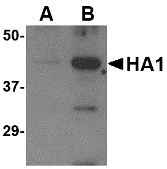
Left: Western blot analysis of (A) 5 ng and (B) 25 ng of recombinant HA1 with Avian Influenza Hemagglutinin antibody at 1 µg/ml.
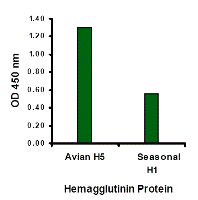
Below: Hemagglutinin antibody at 1 µg/ml specifically recognizes Avian H5N1 influenza virus but not seasonal influenza virus A H1N1 Hemagglutinin protein.
Other Product Images
 Source : Avian influenza hemagglutinin antibody was raised against a synthetic peptide corresponding to 15 amino acids at the amino terminus of the avian influenza hemagglutinin protein. Efforts were made to use relatively conserved regions of the viral sequence as the antigen.
Purification : Affinity chromatography purified via peptide column
Clonality and Clone : This is a polyclonal antibody.
Host : Avian Influenza Hemagglutinin antibody was raised in rabbit. Please use anti-rabbit secondary antibodies.
Immunogen : Avian Influenza Hemagglutinin (N-Terminus) Peptide (Cat. No. 3427P)
Application : Avian influenza hemagglutinin antibody can be used for the detection of the avian influenza hemagglutinin protein from the H5N1 strain of avian influenza A in ELISA. It will detect 10 ng of free peptide at 1 µg/ml.Other applications are pending.
Tested Application(s) : E
Buffer : Antibody is supplied in PBS containing 0.02% sodium azide.
Blocking Peptide : Cat. No. 3427P - Hemagglutinin Peptide
Long-Term Storage : Avian Influenza Hemagglutinin antibody can be stored at 4ºC, stable for one year. As with all antibodies care should be taken to avoid repeated freeze thaw cycles. Antibodies should not be exposed to prolonged high temperatures.
Positive Control
1. Cat. No. 95-101 - H5 Hemagglutinin HA1 Recombinant Protein
Species Reactivity :V
GI Number : 50365729
Accession Number : AAT76166
Short Description : (NT) Avian Flu H5N1 hemagglutinin
References
1. Thompson WW, Shay DK, Weintraub, et al. Mortality associated with influenza and respiratory syncytial virus in the United States. JAMA 2003; 289:179-186.
2. Alexander DJ. A review of avian influenza. Proceedings of the European Society for Veterinary Virology (ESVV) Symposium on Influenza Viruses of Wild and Domestic Animals. Vet. Microbiol. 2000; 74:3-13.
3. Shortridge KF, Zhou NN, Guan Y, et al. Characterization of avian H5N1 influenza viruses from poultry in Hong Kong. Virol. 1998; 252:331-342.
4. Buxton Bridges C, Katz JM, Seto WH, et al. Risk of influenza A (H5N1) infection among health care workers exposed to patients with influenza A (H5N1), Hong Kong. J. Inf. Dis. 2000; 181:344-8.
Catalog# : 3427
Influenza A virus is a major public health threat, killing more than 30,000 people per year in the USA (1). Novel influenza virus strains caused by genetic drift and viral recombination emerge periodically to which humans have little or no immunity, resulting in devastating pandemics. Influenza A can exist in a variety of animals; however it is in birds that all subtypes can be found (2). These subtypes are classified based on the combination of the virus coat glycoproteins hemagglutinin (HA) and neuraminidase (NA) subtypes. During 1997, an H5N1 avian influenza virus was determined to be the cause of death in 6 of 18 infected patients in Hong Kong (3). There was some evidence of human to human spread of this virus, but it is thought that the transmission efficiency was fairly low (4). HA interacts with cell surface proteins containing oligosaccharides with terminal sialyl residues. Virus isolated from a human infected with the H5N1 strain in 1997 could bind to oligosaccharides from human as well as avian sources, indicating its species-jumping ability (5).
Additional Names : Avian Influenza Hemagglutinin (NT), Hemagglutinin
 Description
Left: Western blot analysis of (A) 5 ng and (B) 25 ng of recombinant HA1 with Avian Influenza Hemagglutinin antibody at 1 µg/ml.
Below: Hemagglutinin antibody at 1 µg/ml specifically recognizes Avian H5N1 influenza virus but not seasonal influenza virus A H1N1 Hemagglutinin protein.
Other Product Images
 Source : Avian influenza hemagglutinin antibody was raised against a synthetic peptide corresponding to 15 amino acids at the amino terminus of the avian influenza hemagglutinin protein. Efforts were made to use relatively conserved regions of the viral sequence as the antigen.
Purification : Affinity chromatography purified via peptide column
Clonality and Clone : This is a polyclonal antibody.
Host : Avian Influenza Hemagglutinin antibody was raised in rabbit. Please use anti-rabbit secondary antibodies.
Immunogen : Avian Influenza Hemagglutinin (N-Terminus) Peptide (Cat. No. 3427P)
Application : Avian influenza hemagglutinin antibody can be used for the detection of the avian influenza hemagglutinin protein from the H5N1 strain of avian influenza A in ELISA. It will detect 10 ng of free peptide at 1 µg/ml.Other applications are pending.
Tested Application(s) : E
Buffer : Antibody is supplied in PBS containing 0.02% sodium azide.
Blocking Peptide : Cat. No. 3427P - Hemagglutinin Peptide
Long-Term Storage : Avian Influenza Hemagglutinin antibody can be stored at 4ºC, stable for one year. As with all antibodies care should be taken to avoid repeated freeze thaw cycles. Antibodies should not be exposed to prolonged high temperatures.
Positive Control
1. Cat. No. 95-101 - H5 Hemagglutinin HA1 Recombinant Protein
Species Reactivity :V
GI Number : 50365729
Accession Number : AAT76166
Short Description : (NT) Avian Flu H5N1 hemagglutinin
References
1. Thompson WW, Shay DK, Weintraub, et al. Mortality associated with influenza and respiratory syncytial virus in the United States. JAMA 2003; 289:179-186.
2. Alexander DJ. A review of avian influenza. Proceedings of the European Society for Veterinary Virology (ESVV) Symposium on Influenza Viruses of Wild and Domestic Animals. Vet. Microbiol. 2000; 74:3-13.
3. Shortridge KF, Zhou NN, Guan Y, et al. Characterization of avian H5N1 influenza viruses from poultry in Hong Kong. Virol. 1998; 252:331-342.
4. Buxton Bridges C, Katz JM, Seto WH, et al. Risk of influenza A (H5N1) infection among health care workers exposed to patients with influenza A (H5N1), Hong Kong. J. Inf. Dis. 2000; 181:344-8.
Avian Influenza Hemagglutinin Antibody
Avian Influenza Hemagglutinin Antibody
Catalog# : 3425
Influenza A virus is a major public health threat, killing more than 30,000 people per year in the USA (1). Novel influenza virus strains caused by genetic drift and viral recombination emerge periodically to which humans have little or no immunity, resulting in devastating pandemics. Influenza A can exist in a variety of animals; however it is in birds that all subtypes can be found (2). These subtypes are classified based on the combination of the virus coat glycoproteins hemagglutinin (HA) and neuraminidase (NA) subtypes. During 1997, an H5N1 avian influenza virus was determined to be the cause of death in 6 of 18 infected patients in Hong Kong (3). There was some evidence of human to human spread of this virus, but it is thought that the transmission efficiency was fairly low (4). HA interacts with cell surface proteins containing oligosaccharides with terminal sialyl residues. Virus isolated from a human infected with the H5N1 strain in 1997 could bind to oligosaccharides from human as well as avian sources, indicating its species-jumping ability (5).
Additional Names : Avian Influenza Hemagglutinin (IN), Hemagglutinin

Description
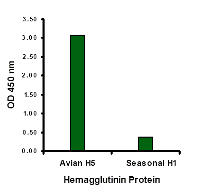
Left: Hemagglutinin antibody at 1 µg/ml specifically recognizes Avian H5N1 influenza virus but not seasonal influenza virus A H1N1 Hemagglutinin protein.
Source : Avian influenza hemagglutinin antibody was raised against a synthetic peptide corresponding to 14 amino acids in the middle of the avian influenza hemagglutinin protein. Efforts were made to use relatively conserved regions of the viral sequence as the antigen.
Purification : Affinity chromatography purified via peptide column
Clonality and Clone : This is a polyclonal antibody.
Host : Avian Influenza Hemagglutinin antibody was raised in rabbit.Please use anti-rabbit secondary antibodies.
Immunogen : Avian Influenza Hemagglutinin (Intermediate Domain) Peptide (Cat. No. 3425P)
Application : Avian influenza hemagglutinin antibody can be used for the detection of the avian influenza hemagglutinin protein from the H5N1 strain of avian influenza A in ELISA. It will detect 10 ng of free peptide at 1 µg/ml.Other applications are pending.
Tested Application(s) : E
Buffer : Antibody is supplied in PBS containing 0.02% sodium azide.
Blocking Peptide : Cat. No. 3425P - Hemagglutinin Peptide
Long-Term Storage : Avian Influenza Hemagglutinin antibody can be stored at 4ºC, stable for one year. As with all antibodies care should be taken to avoid repeated freeze thaw cycles. Antibodies should not be exposed to prolonged high temperatures.
Species Reactivity :V
GI Number : 50365729
Accession Number : AAT76166
Short Description : (IN) Avian Flu H5N1 hemagglutinin
References
1. Thompson WW, Shay DK, Weintraub, et al. Mortality associated with influenza and respiratory syncytial virus in the United States. JAMA 2003; 289:179-186.
2. Alexander DJ. A review of avian influenza. Proceedings of the European Society for Veterinary Virology (ESVV) Symposium on Influenza Viruses of Wild and Domestic Animals. Vet. Microbiol. 2000; 74:3-13.
3. Shortridge KF, Zhou NN, Guan Y, et al. Characterization of avian H5N1 influenza viruses from poultry in Hong Kong. Virol. 1998; 252:331-342.
4. Buxton Bridges C, Katz JM, Seto WH, et al. Risk of influenza A (H5N1) infection among health care workers exposed to patients with influenza A (H5N1), Hong Kong. J. Inf. Dis. 2000; 181:344-8.
Catalog# : 3425
Influenza A virus is a major public health threat, killing more than 30,000 people per year in the USA (1). Novel influenza virus strains caused by genetic drift and viral recombination emerge periodically to which humans have little or no immunity, resulting in devastating pandemics. Influenza A can exist in a variety of animals; however it is in birds that all subtypes can be found (2). These subtypes are classified based on the combination of the virus coat glycoproteins hemagglutinin (HA) and neuraminidase (NA) subtypes. During 1997, an H5N1 avian influenza virus was determined to be the cause of death in 6 of 18 infected patients in Hong Kong (3). There was some evidence of human to human spread of this virus, but it is thought that the transmission efficiency was fairly low (4). HA interacts with cell surface proteins containing oligosaccharides with terminal sialyl residues. Virus isolated from a human infected with the H5N1 strain in 1997 could bind to oligosaccharides from human as well as avian sources, indicating its species-jumping ability (5).
Additional Names : Avian Influenza Hemagglutinin (IN), Hemagglutinin
Description
Left: Hemagglutinin antibody at 1 µg/ml specifically recognizes Avian H5N1 influenza virus but not seasonal influenza virus A H1N1 Hemagglutinin protein.
Source : Avian influenza hemagglutinin antibody was raised against a synthetic peptide corresponding to 14 amino acids in the middle of the avian influenza hemagglutinin protein. Efforts were made to use relatively conserved regions of the viral sequence as the antigen.
Purification : Affinity chromatography purified via peptide column
Clonality and Clone : This is a polyclonal antibody.
Host : Avian Influenza Hemagglutinin antibody was raised in rabbit.Please use anti-rabbit secondary antibodies.
Immunogen : Avian Influenza Hemagglutinin (Intermediate Domain) Peptide (Cat. No. 3425P)
Application : Avian influenza hemagglutinin antibody can be used for the detection of the avian influenza hemagglutinin protein from the H5N1 strain of avian influenza A in ELISA. It will detect 10 ng of free peptide at 1 µg/ml.Other applications are pending.
Tested Application(s) : E
Buffer : Antibody is supplied in PBS containing 0.02% sodium azide.
Blocking Peptide : Cat. No. 3425P - Hemagglutinin Peptide
Long-Term Storage : Avian Influenza Hemagglutinin antibody can be stored at 4ºC, stable for one year. As with all antibodies care should be taken to avoid repeated freeze thaw cycles. Antibodies should not be exposed to prolonged high temperatures.
Species Reactivity :V
GI Number : 50365729
Accession Number : AAT76166
Short Description : (IN) Avian Flu H5N1 hemagglutinin
References
1. Thompson WW, Shay DK, Weintraub, et al. Mortality associated with influenza and respiratory syncytial virus in the United States. JAMA 2003; 289:179-186.
2. Alexander DJ. A review of avian influenza. Proceedings of the European Society for Veterinary Virology (ESVV) Symposium on Influenza Viruses of Wild and Domestic Animals. Vet. Microbiol. 2000; 74:3-13.
3. Shortridge KF, Zhou NN, Guan Y, et al. Characterization of avian H5N1 influenza viruses from poultry in Hong Kong. Virol. 1998; 252:331-342.
4. Buxton Bridges C, Katz JM, Seto WH, et al. Risk of influenza A (H5N1) infection among health care workers exposed to patients with influenza A (H5N1), Hong Kong. J. Inf. Dis. 2000; 181:344-8.
Subscribe to:
Posts (Atom)