Sunday, July 11, 2010

Taq Polyermase (10X Taq Reaction Buffer Mg-Free and 25 mM MgCl2)

Taq Polyermase (10X Taq Reaction Buffer Mg-Free and 25 mM MgCl2)

Alternate Name:
Catalog# : NB-28087
Price/Unit : $213.00
Unit : 1000 units (5 U/ul)

  • Recombinant source
  • Functionality preserved at wide range of temperatures
  • Highly reliable and reproducible reactions
  • Supplied with detergent-free, Mg-free Reaction Buffer for compatibility with microarray and DHPL applications and reactions that require adjustment of magnesium concentrations
  • Compatible with the use of modified nucleotides (dUTP, dITP, biotin-, digoxigenin- and fluorescently-labeled nucleotides)
  • Available in 2 different concentrations: 5 units/µL and 1 unit/µL
Taq DNA Polymerase is a highly thermostable DNA polymerase that possesses a 5´→ 3´ polymerase activity and a very low 5´→ 3´ exonuclease activity. The enzyme is supplied with a detergent-free, Mg-free Reaction Buffer, making it compatible with microarray and DHPLC applications and reactions that require adjustment of magnesium concentration.

Bio-Synthesis's Taq DNA Polymerase with 10X Taq Reaction Buffer (Mg-Free) is available in 2 convenient sizes:

1000 units at a concentration of 5000 units/mL (Cat # 28087)

Enzyme Source:
An E. coli strain with a cloned Taq DNA Polymerase gene from Thermus aquaticus YT-1

APPLICATIONS

  • Routine PCR
  • Preparation of PCR products for cloning
  • Primer extension
  • Microarray analysis
  • DHPLC
  • DNA labelling
  • DNA sequencing
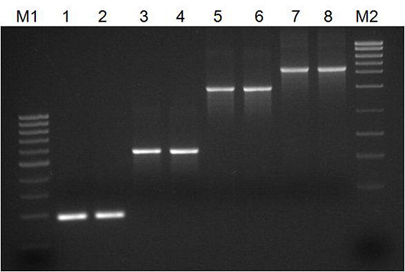
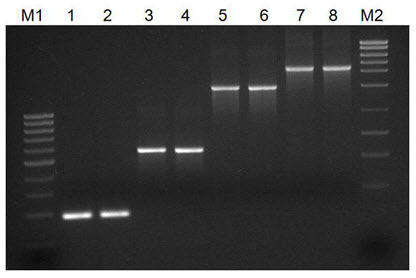
Figure 1. Successful Amplification of Different Sized Amplicons. Bio-Synthesis's Taq DNA Polymerase was used in a series of PCR reactions to amplify a number of different sized amplicons from the adenovirus E2 region. Lanes 1 and 2 correspond to a 189 bp product, Lanes 3 and 4 correspond to a 565 bp product, Lanes 5 and 6 correspond to a 1501 bp product, and Lanes 7 and 8 correspond to a 2202 bp product. Bio-Synthesis's Taq DNA Polymerase was able to amplify all the different sized products with a high sensitivity and yield. Lane M1 is Bio-Synthesis's PCR Sizer 100 bp DNA Ladder and Lane M2 is Bio-Synthesis's MidRanger 1kb DNA Ladder.

Reagents supplied - Cat# 28087:

1000 units of Taq DNA Polymerase (5000 units/mL)
4 x 1.25 mL of 10X Taq Reaction Buffer (Mg-Free)
1.25 mL of 25 mM MgCl2

Reaction Conditions:
1X Taq Reaction Buffer (Mg-Free) - (10 mM Tris-HCl, 50 mM KCl, PCR stabilizer, pH 8.3 @ 25°C)

Taq Storage Buffer:
50 mM Tris-HCl pH 8 at 25°C, 50 mM KCl, 50mM NaCl, 0.5 mM Dithiothreitol, 0.1 mM EDTA, 50% Glycerol, 1% Triton X-100

Storage Temperature:
-20°C
Long-Term Storage : Store in -20°C.
Product Usage
For laboratory research use only, not for diagnostic use! Not for use in humans.

Taq Polyermase (10X Taq Reaction Buffer Mg-Free and 25 mM MgCl2)

Taq Polyermase (10X Taq Reaction Buffer Mg-Free and 25 mM MgCl2)

Catalog# : NB-28093
Price/Unit : $90.00
Unit : 200 units (1 U/ul)

Recombinant source
Functionality preserved at wide range of temperatures
Highly reliable and reproducible reactions
Supplied with detergent-free, Mg-free Reaction Buffer for compatibility with microarray and DHPL applications and reactions that require adjustment of magnesium concentrations
Compatible with the use of modified nucleotides (dUTP, dITP, biotin-, digoxigenin- and fluorescently-labeled nucleotides)
Available in 2 different concentrations: 5 units/µL and 1 unit/µL


Taq DNA Polymerase is a highly thermostable DNA polymerase that possesses a 5´→ 3´ polymerase activity and a very low 5´→ 3´ exonuclease activity. The enzyme is supplied with a detergent-free, Mg-free Reaction Buffer, making it compatible with microarray and DHPLC applications and reactions that require adjustment of magnesium concentration.

Bio-Synthesis's Taq DNA Polymerase with 10X Taq Reaction Buffer (Mg-Free) is available in 2 convenient sizes:

200 units at a concentration of 1000 unitls/mL (Cat# 28093)

Enzyme Source:
An E. coli strain with a cloned Taq DNA Polymerase gene from Thermus aquaticus YT-1

APPLICATIONS
  • Routine PCR
  • Preparation of PCR products for cloning
  • Primer extension
  • Microarray analysis
  • DHPLC
  • DNA labelling
  • DNA sequencing

Figure 1. Successful Amplification of Different Sized Amplicons. Bio-Synthesis's Taq DNA Polymerase was used in a series of PCR reactions to amplify a number of different sized amplicons from the adenovirus E2 region. Lanes 1 and 2 correspond to a 189 bp product, Lanes 3 and 4 correspond to a 565 bp product, Lanes 5 and 6 correspond to a 1501 bp product, and Lanes 7 and 8 correspond to a 2202 bp product. Bio-Synthesis's Taq DNA Polymerase was able to amplify all the different sized products with a high sensitivity and yield. Lane M1 is Bio-Synthesis's PCR Sizer 100 bp DNA Ladder and Lane M2 is Bio-Synthesis's MidRanger 1kb DNA Ladder.

Reagents supplied - Cat# 28093:

200 units of Taq DNA Polymerase (1000 units/mL)
1.25 mL of 10X Taq Reaction Buffer (Mg-Free)
1.25 mL of 25 mM MgCl2

Reaction Conditions:
1X Taq Reaction Buffer (Mg-Free) - (10 mM Tris-HCl, 50 mM KCl, PCR stabilizer, pH 8.3 @ 25°C)

Taq Storage Buffer:
  • 50 mM Tris-HCl pH 8 at 25°C, 50 mM KCl, 50mM NaCl, 0.5 mM Dithiothreitol, 0.1 mM EDTA, 50% Glycerol, 1% Triton X-100
  • Long-Term Storage : -20°C
  • Product Usage
  • For laboratory research use only, not for diagnostic use! Not for use in humans.
Friday, July 9, 2010

Bioconjugates of Nucleic Acids

The availability of synthetic nucleic acids/oligonucleotides and peptides, areas where Bio Synthesis has extensive experience, has promoted the development of conjugates of these molecules cross-linked to compounds such as lipids, carbohydrates and small molecules (drugs) to yield products with distinct properties. Bio Synthesis has developed several approaches for the production of different bioconjugates. From the point of view of therapeutic applications, because of their potential uses in genetic therapy and blocking gene expression, the bioconjugates of nucleic acids are the most important ones. In general these bioconjugates acquire new properties, such as resistance to degradation and passage of the hydrophilic and anionic oligonucleotide across the hydrophobic negatively charged cell membrane or transduction. Yet, a suitable bioconjugate should maintain practically all of the oligonucleotide's biological properties.

Conjugation Services:
  • Oligonucleotide Peptide or protein conjugation
  • Fluorescent labeling of peptide, proteins, drugs, DNA probes, etc.
  • Protein-Protein conjugation
  • Antibody conjugation
  • Drug-Protein, peptide oliognucleotide conjugation
  • Coupling of small molecules to carrier proteins
  • Coupling of small molecules or proteins to solid support
  • Chemical synthesis and modification of small molecules, proteins and drugs
Our team of experienced chemists is available to help our client arrive with the design and cross-linking strategies for the best approach to develop the optimal bioconjugates. As always, every custom project undergoes strict quality control - quality is always guaranteed! Quotations and Ordering: For quotations, you may also contact us by email , toll free (1.800.227.0627), oversea (972.420.8505), fax (1-972-420-0442), or via our secure online order/quote system.

Tuesday, July 6, 2010

DFF40 Antibody

DFF40 Antibody

Catalog# : 2155

Apoptosis is related to many diseases and induced by a family of cell death receptors and their ligands. Cell death signals are transduced by death domain containing adapter molecules and members of the caspase family of proteases. These death signals finally cause the degradation of chromosomal DNA by activated DNase. A mouse DNase that causes DNA fragmentation was identified recently and designated CAD for caspase activated deoxyribonuclease (1,2). The human homologue of mouse CAD was more recently identified by three groups independently and termed CPAN, DFF40, and human CAD, respectively, (3-5). DFF45/ICAD is the inhibitory protein of DFF40/CAD (1,2,6) and forms complex with DFF40/CAD. Upon cleavage of DFF45/ICAD by activated caspase, DFF40/CAD is released and activated and eventually causes the degradation of DNA in the nuclei. Activation of DFF40/CAD, which causes DNA degradation, is the hallmark of apoptotic cell death.

Additional Names : DFF40 (IN), CAD
Description
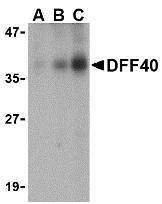
Left: Western blot analysis of DFF40 in Jurkat cell lysate with DFF40 antibody at (A) 0.5, (B) 1 and (C) 2 µg/ml.

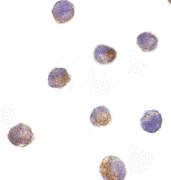
Below: Immunocytochemistry of DFF40 in K562 cells with DFF40 antibody at 10 µg/ml.

Other Product Images

Source : DFF40 antibody was raised against a peptide corresponding to amino acids 203 to 218 of human DFF40 .

Purification : Affinity chromatography purified via peptide column

Clonality and Clone : This is a polyclonal antibody.

Host : DFF40 antibody was raised in rabbit. Please use anti-rabbit secondary antibodies.

Immunogen : Human DFF40 (Intermediate Domain) Peptide (Cat. No. 2155P)

Application : DFF40 antibody can be used for detection of DFF40 /CAD by Western blot at 1:500 dilution. A 40 kDa band can be detected. It is human, mouse, and rat reactive,

Tested Application(s) : E, WB, ICC

Buffer : Antibody is supplied in PBS containing 0.02% sodium azide.

Blocking Peptide : Cat. No. 2155P - DFF40 Peptide

Long-Term Storage : DFF40 antibody can be stored at 4ºC, stable for one year. As with all antibodies care should be taken to avoid repeated freeze thaw cycles. Antibodies should not be exposed to prolonged high temperatures.

Positive Control
1.Cat. No. 1204 - K562 Cell Lysate
2.Cat. No. 1205 Jurkat Whole Cell Lysate

Species Reactivity :H, M, R

GI Number : 4758150

Accession Number : NP_004393

Short Description : (IN) Caspase Activated DNase

References
1.Enari M, Sakahira H, Yokoyama H, Okawa K, Iwamatsu A, Nagata S. A caspase-activated DNase that degrades DNA during apoptosis, and its inhibitor ICAD. Nature 1998;391:43-50
2.Sakahira H, Enari M, Nagata S. Cleavage of CAD inhibitor in CAD activation and DNA degradation during apoptosis. Nature 1998;391:96-99
3.Halenbeck R, MacDonald H, Roulston A, Chen TT, Conroy L, Williams LT. CPAN, a human nuclease regulated by the caspase-sensitive inhibitor DFF45. Curr Biol 1998;8:537-40
4.Liu X, Li P, Widlak P, Zou H, Luo X, Garrard WT, Wang X The 40-kDa subunit of DNA fragmentation factor induces DNA fragmentation and chromatin condensation during apoptosis. Proc Natl Acad Sci USA 1998;95:8461-6

DEDD2 Antibody

DEDD2 Antibody

Catalog# : 3071

Apoptotic signals are often triggered by cell surface death receptors through protein-protein interactions mediated by conserved domains such as the death effector domain (1). A novel death effector domain (DED)-containing protein, DEDD2, has been recently identified and its over-expression in transfected cells induces moderate apoptosis and results in substantial sensitization to apoptosis induced by Fas, TRAIL, and FADD (2). More recently, work has shown that DEDD2 can bind caspase-8 and -10 in addition to FLIP but not FADD (2,3). Like the related protein DEDD, DEDD2 translocates from the cytosol to the nucleus upon induction of apoptosis, and it has been suggested that DEDD2 may target caspase-8 to the nucleus and that DEDD2 thus plays a critical role in death receptor-induced apoptosis (3). At least two alternatively spliced transcript variants encoding distinct isoforms have been found for DEDD2.

Additional Names : DEDD2, DNA-binding death effector domain-containing protein 2, FLAME-3
Description
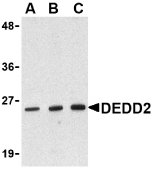
Left: Western blot analysis of DEDD2 in RAW264.7 cell lysate with DEDD2 antibody at (A) 0.5, (B) 1 and (C) 2 μg/ml.


Source : DEDD2 antibody was raised against a peptide corresponding to 11 amino acids near the amino-terminus of human DEDD2.

Purification : Immunoaffinity chromatography purified IgG

Clonality and Clone : This is a polyclonal antibody.

Host : DEDD2 antibody was raised in rabbit. Please use anti-rabbit secondary antibodies.

Immunogen : Human DEDD2 Peptide (Cat. No. 3071P)

Application : DEDD2 antibody can be used for detection of DEDD2 by Western blot at 0.5 to 1 µg/ml.

Tested Application(s) : E, WB

Buffer : Antibody is supplied in PBS containing 0.02% sodium azide.

Blocking Peptide : Cat. No. 3071P - DEDD2 Peptide

Long-Term Storage : DEDD2 antibody can be stored at 4ºC, stable for one year. As with all antibodies care should be taken to avoid repeated freeze thaw cycles. Antibodies should not be exposed to prolonged high temperatures.

Positive Control
1.Cat. No. 1283 - RAW264.7 Cell Lysate

Species Reactivity :H, M, R

GI Number : 19923050

Accession Number : NP_579874

Short Description : A novel death effector domain containing protein

References
1.Tibbetts MD, Zheng L, and Lenardo MJ. The death effector domain protein family: regulators of cellular homeostasis. Nat. Immunol. 2003; 4:404-9.
2.Roth W, Stenner-Liewen F, Pawlowski K, et al. Identification and characterization of DEDD2, a death effector domain-containing protein. J. Biol. Chem. 2002; 277:7501-8.
3.Alcivar A, Hu S, Tang J, et al. DEDD and DEDD2 associate with caspase-8/10 and signal cell death. Oncogene 2003; 22:291-7.

DEDAF Antibody

DEDAF Antibody

Catalog# : 2227

Apoptosis is related to many diseases and induced by a family of cell death receptors and their ligands. Cell death signals are transduced by death domain (DD) death effector domain (DED), and caspase recruitment domain (CARD) containing molecules. Several molecules including caspases and adaptor FADD contain DEDs. A novel protein that interacts with DED of caspase-8 and 10, and FADD was identified recently and designated DEDAF for DED associated factor . DEDAF is identical to the transcriptional repressor RYBP (2). DEDAF/RYBP is expressed in multiple tissues and cell lines. DEDAF interacts with FADD and augments the formation of CD95/FADD/capase-8 complexes at the cell membrane, and interacts with DED-containing DNA biding protein (DEDD) in the nucleus indicating it is involved in the regulation of both cytoplasmic and nuclear events of apoptosis.

Additional Names : DEDAF
Description
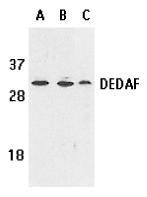
Left: Western blot analysis of DEDAF expression in human A549 (lane A), HepG2 (lane B), and mouse 3T3 (lane C) cell lysates with DEDAF antibody at 1 µg /ml.

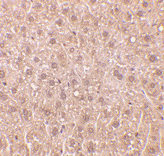
Below: Immunohistochemistry of DEDAF in mouse liver tissue with DEDAF antibody at 10 µg/ml.

Other Product Images

Source : DEDAF antibody was raised against a synthetic peptide corresponding to amino acids 215 to 228 of human DEDAF. The sequence is identical to that of mouse origin.

Purification : Affinity chromatography purified via peptide column

Clonality and Clone : This is a polyclonal antibody.

Host : DEDAF antibody was raised in rabbit. Please use anti-rabbit secondary antibodies.

Immunogen : Human DEDAF Peptide (Cat. No. 2227P)

Application : DEDAF can be used for detection of DEDAF by Western blot at 0.5 to 1 µg/ml.A band at approximately 32 kDa can be detected.

Tested Application(s) : E, WB, IHC

Buffer : Antibody is supplied in PBS containing 0.02% sodium azide.

Blocking Peptide : Cat. No. 2227P - DEDAF Peptide

Long-Term Storage : DEDAF antibody can be stored at 4ºC, stable for one year. As with all antibodies care should be taken to avoid repeated freeze thaw cycles. Antibodies should not be exposed to prolonged high temperatures.

Positive Control
1.Cat. No. 1203 - A549 Cell Lysate
2.Cat. No. 1211 - HepG2 Whole Cell Lysate
3.Cat. No. 1404 - Mouse Liver Tissue Lysate

Species Reactivity :H, M, R

GI Number : 5802963

Accession Number : AF179286

Short Description : A novel regulator of apoptosis

References

1.Zheng L, Schickling O, Peter ME, Lenardo MJ. The death effector domain-associated factor (DEDAF) plays distinct regulatory roles in the nucleus and cytoplasm. J Biol Chem. 2001;276(34):31945-52.
2.Garcia E, Marcos-Gutierrez C, del Mar Lorente M, Moreno JC, Vidal M. RYBP, a new repressor protein that interacts with components of the mammalian Polycomb complex, and with the transcription factor YY1. EMBO J. 1999;18(12):3404-18. (RD0201)

DcR3 Antibody

DcR3 Antibody

Catalog# : 2140

Apoptosis is induced by certain cytokines including TNF and Fas ligand in the TNF family through their death domain containing receptors. Several novel members in the TNFR family including DR3, DR4, DR5, and DR6 were recently discovered and function as cell death receptors. Two decoy receptors, DcR1 and DcR2, were recently identified to compete with DR4 and DR5 for their ligand TRAIL binding. A novel decoy receptor was more recently discovered and designated DcR3 and TR6, respectively, (1,2). Unlike DcR1 and DcR2, DcR3 is a soluble rather than a membrane associated molecule. DcR3 binds to FasL and LIGHT and inhibits FasL and LIGHT induced apoptosis (1,2). DcR3 transcript is expressed in a number of lung and colon carcinomas and in some normal tissues.

Additional Names : DcR3, DCR3, TR6
Description
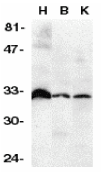
Left: Western blot analysis of DcR3 in human heart (H), brain (B), and kidney (K) tissue lysates with DcR3 antibody at 1:500 dilution.

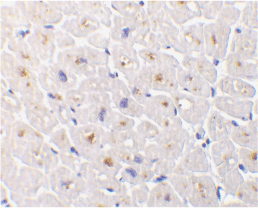
Below: Immunohistochemistry of DcR3 in human heart tissue with DcR3 antibody at 1 µg/ml.

Other Product Images
Source : DcR3 antibody was raised against a peptide corresponding to amino acids near the carboxy terminus of human DcR3 precursor.

Purification : Ion exchange chromatography purified

Clonality and Clone : This is a polyclonal antibody.

Host : DcR3 antibody was raised in rabbit. Please use anti-rabbit secondary antibodies.

Immunogen : Human DcR3 (N-Terminus) Peptide (Cat. No. 2140P)

Application : DcR3 antibody can be used for detection of DcR3 expression by Western blot at 1:500 to 1:1000 dilution. An approximately 33 kDa band can be detected.

Tested Application(s) : E, WB, IHC

Buffer : Antibody is supplied in PBS containing 0.02% sodium azide.

Blocking Peptide : Cat. No. 2140P - DcR3 Peptide

Long-Term Storage : DcR3 antibody can be stored at 4ºC, stable for one year. As with all antibodies care should be taken to avoid repeated freeze thaw cycles. Antibodies should not be exposed to prolonged high temperatures.

Positive Control
1.Cat. No. 1301 - Human Heart Tissue Lysate

Species Reactivity :H, M, R

GI Number : 4106877

Accession Number : AF104419

Short Description : Decoy Receptor for FASL and LIGHT

References
1.Pitti RM, Marsters SA, Lawrence DA, Roy M, Kischkel FC, Dowd P, Huang A, Donahue CJ, Sherwood SW, Baldwin DT, Godowski PJ, Wood WI, Gurney AL, Hillan KJ, Cohen RL, Goddard AD, Botstein D, Ashkenazi A. Genomic amplification of a decoy receptor for Fas ligand in lung and colon cancer. Nature 1998;396:699-703
2.Yu KY, Kwon B, Ni J, Zhai Y, Ebner R, Kwon BS. A newly identified member of tumor necrosis factor receptor superfamily (TR6) suppresses LIGHT-mediated apoptosis. J Biol Chem 1999;274:13733-6 (RD1299)

DcR2 Antibody

DcR2 Antibody

Catalog# : 2021

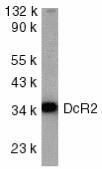
Apoptosis is induced by certain cytokines including TNF and Fas ligand in the TNF family through their death domain containing receptors. TRAIL/Apo2L is a new member of the TNF family and induces apoptosis of a variety of tumor cell lines. DR4 and DR5 are the recently identified functional receptors for TRAIL, and DcR1/TRID is a decoy receptor (1-3). Another member of the TRAIL receptor family was more recently identified and designated DcR2, TRAIL-R4, or TRUNDD (4-6). DcR2 has an extracellular TRAIL-binding domain but lacks intracellular death domain and does not induce apoptosis. Like DR4 and DR5, DcR2 transcript is widely expressed in normal human tissues. Overexpression of DcR2 attenuated TRAIL-induced apoptosis.

Additional Names : DcR2 (ID), TRAIL-R4

Description
Left: Western blot analysis of DcR2 in HeLa whole cell lysate with DcR2 antibody at 1:1000 dilution.

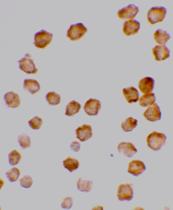
Below: Immunocytochemistry staining of HeLa cells using DcR2 antibody at 10µg/ml.

Other Product Images

Source : DcR2 antibody was raised against a peptide corresponding to amino acids 249 to 263 of human DcR2 precursor.

Purification : Affinity chromatography purified via peptide column

Clonality and Clone : This is a polyclonal antibody.

Host : DcR2 antibody was raised in rabbit. Please use anti-rabbit secondary antibodies.

Immunogen : Human DcR2 (Intracellular Domain) Peptide (Cat. No. 2021P)

Application : DcR2 antibody can be used for detection of DcR2 expression by Western blot at 1:1000 to 1:2000 dilution.

Tested Application(s) : E, WB, ICC

Buffer : Antibody is supplied in PBS containing 0.02% sodium azide.

Blocking Peptide : Cat. No. 2021P - DcR2 Peptide

Long-Term Storage : DcR2 antibody can be stored at 4ºC, stable for one year. As with all antibodies care should be taken to avoid repeated freeze thaw cycles. Antibodies should not be exposed to prolonged high temperatures.

Positive Control
1.Cat. No. 1201 - HeLa Cell Lysate

Species Reactivity :H, M, R

GI Number : 18203495

Accession Number : Q9UBN6

Short Description : (ID) Decoy Receptor 2 for TRAIL

References
1.Pan G; O'Rourke K; Chinnaiyan AM; O'Rourke K; Gentz R; Ebner R; Ni J; Dixit VM. The receptor for the cytotoxic ligand TRAIL. Science; 1997;276:111-113
2.Pan G, Ni J, Wei YF, Yu G, Gentz R, Dixit VM. An antagonist decoy receptor and a death domain-containing receptor for TRAIL. Science 1997;277:815-8
3.Sheridan JP, Marsters SA, Pitti RM, Gurney A, Skubatch M, Baldwin D, Ramakrishnan L, Gray CL, Baker K, Wood WI, Goddard AD, Godowski P, Ashkenazi A. Control of TRAIL-induced apoptosis by a family of signaling and decoy receptors. Science 1997;277:818-21
4.Marsters SA, Sheridan JP, Pitti RM, Huang A, Skubatch M, Baldwin D, Yuan J, Gurney A, Goddard AD, Godowski P, Ashkenazi A. A novel receptor for Apo2L/TRAIL contains a truncated death domain. Curr Biol 1997;7:1003-6

Monday, July 5, 2010

Custom Organic Synthesis

With over two decades of combined experience and expertise in a wide range of chemical synthesis techniques, BSI is a one-stop source for synthesis solutions for clients worldwide. Our team of Ph.D. organic chemists have expertise in a wide variety of chemistries from intermediates, reference compounds, and starting materials, to derivatives of lead compounds. BSI can meet your synthesis needs in the following areas:

1. Custom Synthesis from Milligram to Kilogram
Since initial research laboratory productions are not suitable for preparing thousands of grams of target product, our staff will adapt and adopt a synthesis that best suits our clients' expectations

2. Scale-up from an Existing Production Process
With demonstrated routes provided by our clients, our chemists can assist in identifying a process and developing steps for bulk manufacturing.

3. Research and Development Process Optimization
Whether it is an expansion of an existing scalable process or patent development, BSI's professional staff can develop new and proprietary routes. Utilizing state-of-art technology, we offer design of experiments, real-time reaction profiles and total process development. BSI can assist clients in transferring their research laboratory projects to pilot productions.

Project Portfolios
  • Multi-Step Synthesis
  • Phamaceutical Intermediates
  • Peptide Building Blocks
  • Custom Bioconjugations
  • Inositol Phosphates
  • Lipids and Phospholipids
  • Imidazole Derivatives
  • Patent Development
  • Thiadiazolidinone Derivatives
  • And Other Biologically Active Structures
Services:
Two types of custom organic synthesis has been offered by BSI:

Laboratory Custom Synthesis Projects
Under laboratory custom synthesis projects, our customer should provide literature, methods, or their own synthesis route(s), describing all steps in detail. The more information provided, the shorter the project timeline and the lower the cost. Our chemists will evaluate synthesis feasibility prior to the initiation of the projects, and provide an estimate of cost and delivery time.

Contract Research and Development
Contract research is undertaken when synthetic information is limited, the project scope is major, is needed for scale up efforts, patent portfolio development, or other purposes. In these cases, BSI will determine the best synthetic approach to meet the clients' priorities/needs. Prior to project execution, our staff chemists will conduct pilot runs to determine feasibility and an initial set-up fee will be charged. Once a pilot project is completed, a research agreement is drawn up. All projects are conducted under strict confidentiality.

For more information on custom organic synthesis, call 800-227-0627 or write to us at biosyn@biosyn.com

Thursday, July 1, 2010

Custom LNA Price Options

BSI offer LNA oligos synthesis with different versatilities. LNA oligo can be order with a mixture of DNA, RNA, nucleic acid analogues and different synthesis backbone and modifications.

All LNA oligo synthesis include/are:
  • NO Setup Fee
  • Deprotected, Desalted and Ready to Use
  • QC by Mass Spectrometry MALDI-TOF, HPLC or PAGE
  • Guaranteed Yields and Turnaround

  • Large-Scale LNA Synthesis, are now available from 10 micromoles up to two grams! Call Technical Support at 800-227-0627 or write to us at biosyn@biosyn.com for more information.
  • Large-Scale LNA Synthesis, are now available from 10 micromoles up to two grams! Call Technical Support at 800-227-0627 or write to us at biosyn@biosyn.com for more information.
Unmodified LNA Purifications Pricing
Unmodified LNA Purifications Yields